

Sacks & Slyk AI Startup Launcher
Data Groomers, UpUps, and Potable Reuse VC.

Gist: Test out the David Sacks AI Give-to-Get Startup Success Model powered by Slyk AI-Commerce. Select the Data Vertical you aim to win, Reward Point System, and Upside Sharing Mechanism. Examples: Paralegal_AI (Law), Laiout (Architecture), HomeRank (Real Estate). Crafty VC, All-in Bestie, and Call-in Founder David Sacks lays out a cogent game plan for value capture for AI startups in his AI-assisted (documented here) blogpost, The Give-to-Get Model for AI Startups.
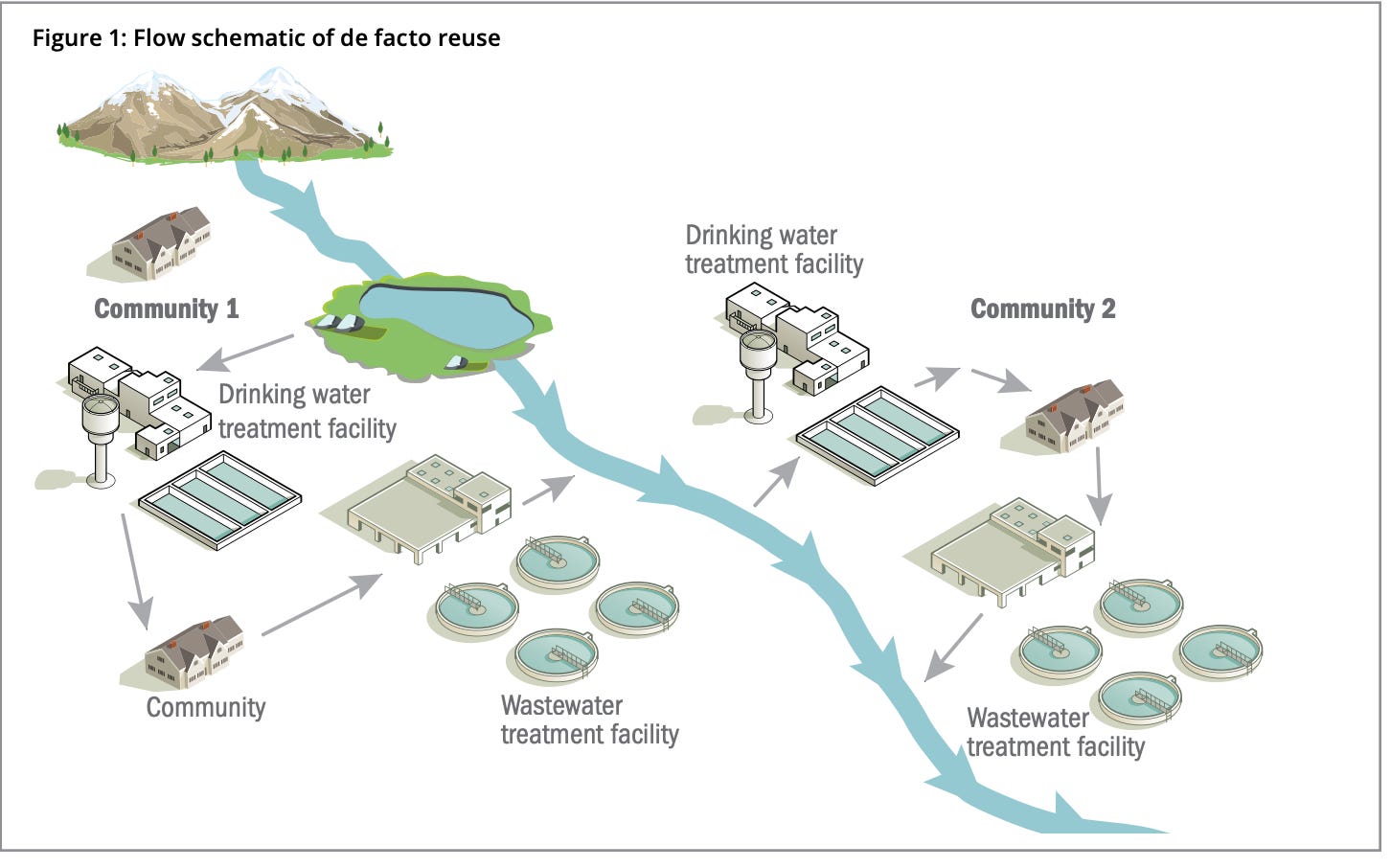
Direct Potable Reuse
Give data (for AI training) to get access to a useful AI tool. That’s the gist of the Sacks approach, inspired by a startup called Jigsaw (founded 2004) whose give-to-get data crowdsourcing/grooming platform was sufficiently compelling to be acquired by Salesforce in 2010 (on $18MM of VC raised).
Parsa Prayer: May all AI startups launched following this guide (and their investors) enjoy outcomes similar to Jigsaw. The give-to-get model for AI startups reminds me of waste water rendered drinkable. The data that trains AI is a byproduct of human activity, deposited in a billions of temporary storage tanks— data lakes, hard drives, cloud storage accounts. This “waste data” is recovered to train AI tools until prompts result in responses that transcend the speed, cost, and quality of human-derived work-product. AI makes lovely lotus flowers bloom on the surface of a stagnant data pond.
Sacks advises founders thinking about launching AI-powered startups to engineer data aqueduct systems that fill data reservoirs by rewarding data dumps with fishing rights aboard the Startup’s purpose-built/trained AI trawler.
AI Startup Math
Don’t like water metaphors? Let’s try math.
Let X = data, Y = utility of an AI tool trained on X data.
As X increases in volume, Y increases in value. The better the quality of the data (Q) and the AI training (T), the faster Y grows relative to X. And vice versa.
To represent the time component and the dynamic nature of the relationships between X, Y, Q, and T, we can postulate a discrete-time model indexed by the day t.
X(t) = accumulated data in kilobits on day t.
Y(t) = utility of the AI tool on day t.
Q(t, X(t)) = human work needed to ensure data quality on day t per kilobit of data X contributed.
T(t, X(t)) = human work needed to train AI on day t.
Y(t, X(t), Q(t, X(t)), T(t, X(t))) = f(t, X(t)) * (1 + g(Q(t, X(t)), T(t, X(t))))
In this equation, Y (utility of the AI tool on day t) is a function of the accumulated data X(t), and the total human work done: Q(t, X(t)) and T(t, X(t)).
The functions f and g describe the relationships between the utility of the AI tool and the total data contributed, as well as the relationship of the data quality control and AI training on the rate of growth of Y relative to X.
As we shall see, the trick is figuring out how to maximize X and the market value of Y while minimizing the costs of Q and T.
Ideally we want to only pay for X, Q, and T with Y (access tokens). Traditional tech startup incentives (Upside Sharing) is the way to get the data waterwheel spinning fast, i.e. make it easy for contributors to convert AI usage credits (Y) to cash or an ownership stake.
UpUps Uber Alles
Isn’t give to get how successful tech startups have always been built?
Founders contribute entrepreneurial creativity, i.e. Founder Energy, in exchange for the potential upside of the tech-leveraging solution they aim to build. Startup upside (let’s call it “UpUp”) typically manifests as fractional ownership of an entity—Corp, DAO, or LLC— that owns/controls the intellectual property of the better mousetrap being built and the cashflow that will one day be generated by its commercialization.
Give sweat/cash/expertise to get UpUp is the glorious quid pro quo that makes the Startup/VC world go round: the rationally optimistic bet on a non-zero probability that Founder Energy can be converted into Cashflow, maybe lots of Cashflow. Startup builders (founders and the early team) earn their UpUp. VCs invest cash in exchange for UpUp. Early adopters receive UpUp in the form of consumer surplus— the Startup builds something users want, need, maybe even love.
Adding UpUp to the Sacks give-to-get model supercharges the incentives on data flows, quality controls, and training runs. Give everyone who helps an AI startup win its vertical an easy path to UpUp, not just the Founders inspired by Sacks’ article. Make it easy for data contributors to convert the AI tool usage credits they receive into cash and fractional ownership of future cashflows. Then watch your data aqueducts start to flow, your data reservoir fill, and your AI get trained up faster than Rocky Balboa in a movie montage sequence.
The Professional’s Dilemma
Pick a vertical, any vertical. The community that will benefit most from your AI startup will be the one whose collective judgement you will be devaluing and whose productivity you will be enhancing. The faster you succeed at increasing the utility of your AI tool (Y), the sooner you will impact the livelihoods of the people whose experience and opinions it will be replacing/supercharging. The give-to-get model means the folks with the biggest opportunity to participate in the UpUp of what you are building will also be the ones with the most to lose (and gain) if you are successful.
This is a new phenomenon in the world of tech startup disruption of incumbent business models. Uber destroyed the value of taxi medallions, but they didn’t need existing taxi drivers to join them to win— anyone with a car would do. With give-to-get AI Startups the potential victims of a founder’s ambition are also the folks with the most to gain by helping build the AI startup.
Founders will be doing the impacted community an enormous favor by recruiting its members to learn, earn, and own a piece of the AI action. Those that get in early will see their output supercharged by the AI tool they help build. Those that don’t learn and earn from new AI tooling will likely experience a negative impact on their income, status, and livelihood.
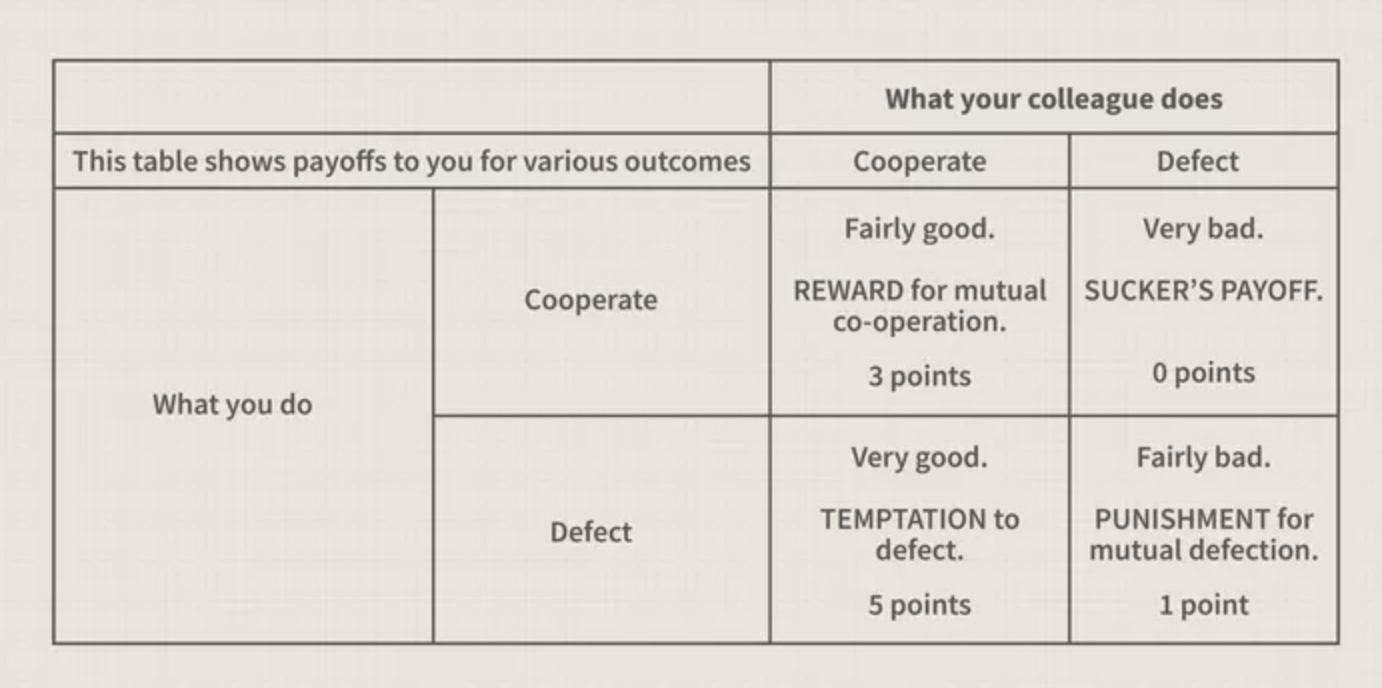
From the point of view of the impacted community, it’s a version of the prisoner’s dilemma. If everyone holds out, in theory the status quo can be maintained. But if some of the community defect to contribute to the AI startup’s success— by providing data, quality control, or AI training— then holdouts get wrecked. Those who move fastest will end up with the most UpUp, including ownership interest that could prove to be worth a lot more than the sum of all their future earnings under the pre-AI paradigm, the entrepreneurial carrot that motivates all Startup Founders.
Explaining the inevitability of AI disruption of human judgement in a given vertical is as important as communicating how the impacted community can benefit from learning about, earning from, and owning UpUp in the AI tool that will be impact them whether they help build it or not.
Think of how the humans make money from their judgement in your vertical and the data byproduct of that work. Now think of the folks who pay for that judgement and how much they pay. Who owns the rights to the data byproduct? Just because the expert being disrupted doesn’t own the data, doesn’t mean they don’t have a relationship with the client who does and can ask them to contribute it in exchange for a share of the UpUp. Affiliate links, referral rewards, and multi-level marketing arrangements should be embraced to incentivize defections and make it difficult for holdouts to ignore the potential upside of participating.
Assume that for every X volume of data produced as byproduct of judgement—legal memos, architecture plans, real estate appraisals— the community currently (pre-AI disruption) earns A. They’ve already earned that A for old data byproduct (billed hours, paid plans, earned commissions), so anything they earn from contributing work product data is a bonus, gravy, found money. In addition, the community can earn by doing quality control and training work for the AI startup (Q and T from the math section above). In exchange, the Community will get paid in access tokens Y, whose utility and value will increase as a function of X, Q, and T. The Community can also earn by recruiting more members to participate via referral earn rewards (see below on how to configure these incentives).
If your AI tool works well, A should converge on the market price of Y, but one big benefit the AI Startup can offer the impacted community is early access to a tool that allows them to increase productivity versus non-participating competitors, resulting in pricing power and the ability to serve more clients, i.e. more revenue.
To win a vertical, Founders need to understand the economics of the Community whose judgement they are disrupting and communicate the benefits of helping their AI Startup win. It’s essential to make the UpUp math clear in the context of existing income streams.
Utility Liquidity Validity
Pricing Y for points-to-cash exchange (can be fiat or cryptocurrency settlement) is essential to persuade the Community that they aren’t getting saddled with worthless usage tokens in exchange for helping startup founders build an AI to destroy their professional life. If they can earn Y (for X, Q, and T), and cash their points out for income (C), they can compare those new earnings it to their current income from their judgement work (A) and make a short-term cost/benefit analysis. Cash liquidity for Y usage credits will also be attractive to contributors doing quality control and AI training work too.
This pricing of Y needs to be done anyway for the AI startup to survive, i.e. selling AI tool usage credits to members of the Community who want to pay use it to increase their productivity and eventually to the clients that previously paid the Community who want to see if using the AI tool directly can save them time and money vs.relying on traditional human judgement.
Sharing the UpUps in exchange for contributions also implies defining and pricing an ownership interest (O) to provide a long-term benefit for Community participation. This also has to be done anyway if the AI startup wants to raise VC. Offering the Community the opportunity to own a piece of the action will also likely result in attracting the most productive, well-paid, and expert members of the Community, the ones who built their judgement up over many years of study, work, and practice. Long-term thinkers want to play long-term games and that means getting a share of the UpUp.
Making it easy for data contributors to convert their usage tokens (Y) into UpUp (O) will also likely attract community members in possession of large amounts of high-quality data, thereby speeding the growth of tool utility (Y) and reducing the amount of quality control (Q) needed.
Most startups shy away from digital asset rewards, exchange, and selling upside instruments to their community for fear of legal liability. If done incorrectly or without the proper compliance tooling, it's easy to fall afoul of FinCEN Money Service Business requirements, state-to-state Money Transmission laws, and SEC regs.
Parsa Embedded Ad: Fortunately for AI Startup Founders, Slyk makes it easy for founders to launch compliant Give & Earn to Get & Own communities, with SlykPay™ for processing coin to cash (fiat or crypto) redemptions and SlykRaise™ for Compliant Community Crowdfunding under RegCF. It’s also worth noting that Jigsaw’s incentivized data-sourcing/grooming model was controversial when it launched, partly because contributors and curators were originally paid cash, replaced with usage/access credits a few years later. Two decades on from Jigsaw’s launch, give-to-get has been mainstreamed by affiliate links and referral reward programs. It’s the basis of cryptocurrency’s decentralized security models, i.e. POW mining and POS staking. Bug/code bounties and peer-to-peer marketplaces all have strong give-to-get elements.
As with all startups, AI or otherwise, the devil is in getting the incentives right to grow X while keeping the cost of Q and T down until Y is high enough for people to buy with money rather than just contributions of time, effort, and data.
The rest of this essay is an easy-to-follow guide to building, launching, and operating a Give & Earn to Get & Own AI tool building flywheel using Slyk’s Startup Success platform.
AI Startup Launch Guide
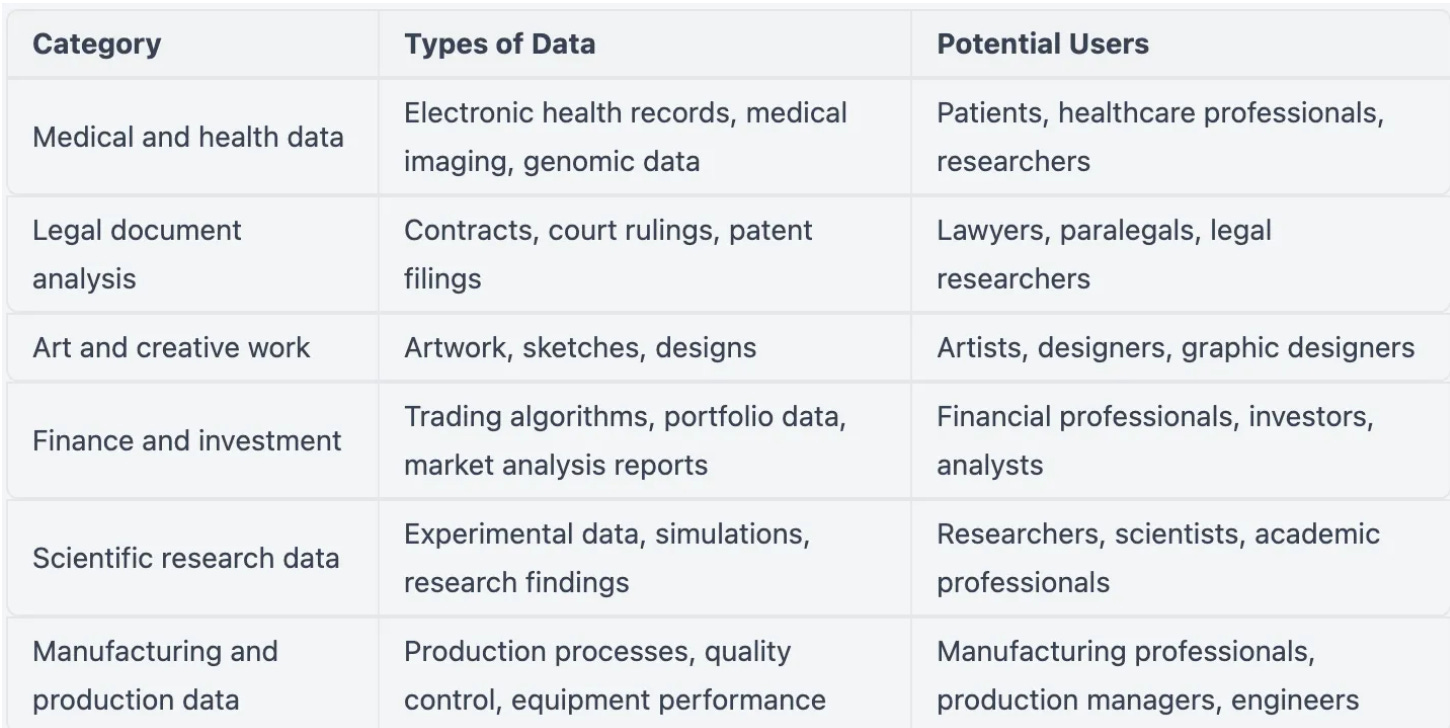
Let’s take three industries that seem ripe for disruption by AI, one theoretical from the Sacks blog (Legal), one actual AI startup from a comment to the blog (Architecture), and one from a startup I recently invested in via my Slykcess Fund (Residential Real Estate).
Why those three?
Law: I graduated from law school, passed the bar exam, and worked at a big corporate law firm for a year. The startups I build are regularly hit with hefty legal bills, especially when raising VC or navigating OFAC, MSB, or FinCEN regulations. Having been on both sides of the law firm billable hour, I have no doubt that an AI tool for legal document analysis will reduce legal costs by removing much of the the paralegal/associate expense from law firms and increasing the output of the most experienced lawyers, i.e. more billable hours at top partner rates.
The data (the byproduct of legal work) needed to build such a legal AI tool is subject to ethical and legal restrictions that the startup’s give-to-get incentive system will need to navigate. This can be done via a referral reward system whereby clients who own the work product contribute the data and are rewarded Y, with the lawyers and paralegals earning a % of the Y reward for bringing their clients over, as well as for recruiting other paralegals and lawyers for quality control and training work. Due to the restrictions around data contributions, Law is a hard mode vertical.
Architecture: A commenter to the Sacks blog Ian Patrick has launched a startup called Laiout, but is “having a lot of trouble finding good data.” Sounds like he needs the Sacks + Slyk AI Startup Launch Playbook. In the standard AIA agreement, the architect retains ownership of the copyright in the plans and the client purchases the right to use the plans once in the building of your house. But architects face fewer legal and ethical restrictions, and so they can contribute directly. Architecture seems like an easier vertical and we can get feedback directly from Mr. Patrick to see if our guide helps grow Laiout. Architecture is Intermediate Mode.
Real Estate: Residential real estate is the biggest asset class in the world while home valuation is an inscrutable black box. If you’ve ever been in the market to buy or sell a house, you know that pricing homes is mostly voodoo and that real estate agents are all flying blind as bats with Havana Syndrome. Zillow lost $880MM in 2021 by following their optimistic (owner boner, buyer cryer) Zestimate valuation model. Why? Likely because home valuation is necessarily very local, i.e. the three most important factors are location (lot and structure), location (neighbors and community), and location (surrounding communities). Homerank is data-driven home valuation startup that leverages AI and crowdsourced updates on the three main home value-defining location scores to provide the most accurate home appraisal. Homerank agents (“Homies”) earn Homerank usage credits (Y) for scoring the houses they visit generating AI training data (X) and Quality Control (Q). Homies can cashout the usage credits as dollars or investment in Homerank’s SAFE.
Real Estate is AI Startup Easy Mode because real estate data (X) is often public or relatively inexpensive to purchase and the Community whose judgement defines market bids and asks (real estate agents) doesn’t make much income (A) per house visited, i.e. agents are easily incentivized to contribute to Homerank. Q and T are both achieved via a simple web application with toggles that could serve as a rough model for how other AI vertical training and quality control applications can be built. Real estate valuations are already so bad that the utility of the Homerank tool (Y) is already greater than non-crowdsourced alternatives (Zillow, Redfin) in the markets where Homies are active (Marin County).
To follow this Guide to AI Vertical Domination, first get the Slyk AI Startup Template Here. Or join the Law, Architecture, and Real Estate AI Startups linked above, and then earn or pay your way to clone them.
Give & Earn to Get & Own Configuration Guide:
Data Vertical. Remember we’re replacing human judgment trained by life experience with an AI tool trained on data derived from the human judgement expressed in the byproduct of myriad market interactions.
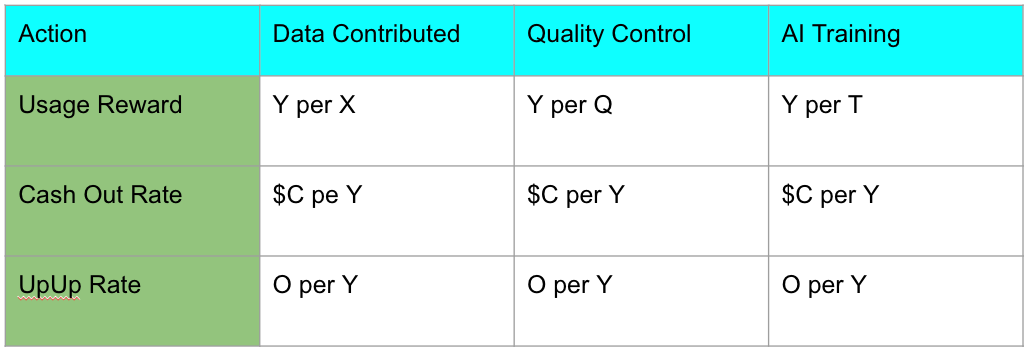
Define AI Rewards. How much Y usage will you give per X volume of data contributed? How much per Q quality review of X data? How much per T increment of AI training. If you’re successful, Y will become more valuable over time and you’ll get more X,Q, and T per unit of Y.
Coin-Gated Collaboration. Curating community is essential for every startup (lookie loos and freeriders are community clutter). But when you are give-to-get, curating community is existential, otherwise your startup will be overrun by scammers. Make your startup play-to-learn (as well as to earn and own) and you’ll avoid the pain familiar to every fintech founder who ever ran a multi-asset digital ledger or a referral rewards program.
Price Solution. Even if it’s not yet built— a pack of Y access tokens costs $C, payable in the settlement currency of your choice. This will also give you a Y to C (cash-out) exchange rate.
Referral Rewards. Incentivize the Community to recruit for you, so that they can earn from making both direct contributions and from helping you expand the top of funnel for data, quality controllers, and AI trainers. They can also earn by promoting the service and bringing paying clients. The more ways your Community can earn, the more engaged and aligned it will be with your Startup’s success.
Limits, Minimums, Fees. You might want to limit how much Y any one contributor can earn. You’ll definitely want to set minimums for conversions of Y to C and Y to O (UpUp). You might also want to add a fee for cash-outs since that requires some manual work processing payments until you are big enough to qualify for SlykPay™ (250 active members).
Adjust your rewards, prices, limits, and fees based on results and feedback from the Community.
Community Communication Guide:
Distribution. I’d define minimum viable distribution for your Startup as a video channel (Youtube, TikTok, or Insta), a social media channel (Twitter or LI), a blog (Medium or Substack), and a coin-gated interactive forum (Discord or Slack).
Schedule. Commit to making one short blog/thread/video per week pitching your AI startup. Visualize the proud professional humans whose judgment you are going to both devalue and enhance with the AI tool you are building; then picture their clients and how much money they’ll save, the faster turnaround time, their favorite professionals always available, output 10X-ed by your startup.
Content. Follow this simple four-week content guide:
W1: AI is coming for [Vertical].
W2: Data X produced by [Community] is now worth something.
W3: How [Community] can Earn Y by contributing X, Q, or T or referring same.
W4: How [Vertical] will be better after AI.
Repeat content production cycle, iterating and improving based on Community feedback.
Community Venture Capital: When you hit 1,000 active members, it’s time to raise up to $5MM with SlykRaise™— invite everyone form the Community, whether they’ve earned Y or not, to share in the UpUp of what you’re building.
Sacks + Slyk: AI Startup Success
“Show me the incentives and I’ll show you the outcome,” says Charlie Munger of Berkshire Hathaway fame.
Over the past 25 years building tech startups, and especially the last ten building bitcoin-and-bank connected fintech startups, I’ve come to the conclusion that startup success depends on founders building an engaged and active community before polishing a pitch deck, searching for a technical cofounder, flirting with VCs, or building MVPs. Too much Founder Energy is wasted doing all that and once Founder Energy goes low enough the startup is doomed. The result is sky-high startup and vc failure rates— in my view the biggest problem facing our civilization, as it results in less entrepreneurial risk-taking and more centralized power and abuse by give government and big tech.
The two M’s in Community stand for Missionary Mercenaries (Mercenary Missionaries also work)— the point is that your Community members should be motivated by both the moral and tech innovation of your startup. It’s not enough to hire a social media manager, set up a Discord server, or host meetups. That’s wholly insufficient in a world of natural tech monopolies with limitless attention-grabbing power and an explosion of apps competing for user eyeballs, dopamine, and cash.
Parsa Startup M&M Communities: Uphold members inspired by the innovation & upside of crypto; Airtm P2P forex agents earn commissions by helping their friends and family route around hyperinflation; Cadoo health challenge hosts inspire their followers and fans to reach fitness goals and also earn from everyone who joins. Although the winning AI value capture model is TBD (or DOA if you believe Eliezer Yudkowsky), Sacks provides a good jumping off point for ambitious founders assessing a world with vast underground data aquifers. The recent explosion of AI tooling has transformed the world’s data water table into a giant play(to earn & own)ground if you follow the give-to-get model.
Launch your AI Startup on Slyk following this guide and watch your water wheel start to spin. Engineer a startup that incentivizes high-volume data capture, efficient quality control, and effective training to win the race to build the best AI tool for a market niche. Then sell to FAANG’s voracious M&A machine looking to add valuable data sets to their generalized AI large language model.
(Note: This AI Startup Launch Guide owes a debt to the AI-assisted TNS Memelord Essay Generator. Get it here.)